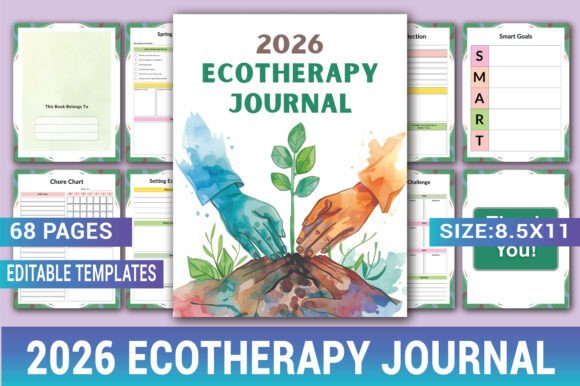
2026 Ecotherapy Journal – Heal, Reflect, Reconnect with Nature
In today’s fast-paced world, where stress and digital overload are the norm, finding moments of peace and connection has never been more important. The 2026 Ecotherapy Journal is a powerful tool designed to help you reconnect with nature while nurturing your mental, emotional, and physical well-being. Rooted in ecotherapy practices, this journal blends mindful reflection, seasonal activities, nature-based therapy exercises, and structured planning tools—making it the perfect companion for a calmer, more balanced life throughout the year.
What is Ecotherapy?
Ecotherapy is a form of therapeutic practice that uses nature as a medium to improve mental health and emotional resilience. It is based on the idea that spending time in natural environments can reduce stress, enhance mood, and promote overall well-being. Unlike traditional therapy, ecotherapy focuses on the healing power of the environment itself, encouraging individuals to engage with the natural world through activities like walking in the forest, gardening, or simply sitting quietly in a park.
Research has shown that ecotherapy can be especially effective for those dealing with anxiety, depression, and burnout. By fostering a deeper connection with nature, individuals often experience a sense of calm, clarity, and renewed purpose. The 2026 Ecotherapy Journal builds on these principles by offering a structured yet flexible guide to integrate ecotherapy into daily life.
Key Features of the 2026 Ecotherapy Journal
- Ecotherapy Foundations – Learn what ecotherapy is and how nature supports mental health.
- 2026 Yearly, Monthly, Weekly Calendars – Stay organized with clear planning layouts.
- Daily Nature Reflections – Track mood, gratitude, sensory experiences, and time in nature.
- Seasonal Connections – Guided prompts, rituals, and reflections for each season (Spring, Summer, Autumn, Winter).
- Moon Cycle & Sunlight Tracker – Align your energy with natural rhythms.
- Sound Therapy Mindful Listening Exercises – Reduce stress using nature soundscapes.
- Forest Bathing Mindful Walking Logs – Deepen awareness through guided outdoor practices.
- Eco-Art Therapy Activities – Mandalas, nature collage, stone painting, and creative grounding.
- Poetry Nature Writing Prompts – Inspire creativity and emotional expression.
- Mood, Stress, Sleep Tracking – Monitor your well-being over time.
Why Use an Ecotherapy Journal?
The 2026 Ecotherapy Journal is more than just a planner—it's a comprehensive wellness tool that helps you cultivate a sustainable relationship with nature. In a world dominated by screens and deadlines, it offers a much-needed reminder of the importance of grounding yourself in the present moment. By incorporating ecotherapy into your routine, you can:
- Reduce stress and anxiety – Studies show that spending time in nature lowers cortisol levels and improves mood.
- Improve focus and productivity – Natural environments have been found to enhance cognitive function and creativity.
- Boost emotional resilience – Regular interaction with nature fosters a sense of belonging and purpose.
- Enhance sleep quality – Exposure to natural light and calming sounds can regulate your circadian rhythm.
- Foster mindfulness and self-awareness – Journaling and reflection encourage deeper introspection and personal growth.
How to Use the 2026 Ecotherapy Journal
The journal is designed to be used flexibly, whether you're a beginner or someone with prior experience in ecotherapy. Here's how you can get started:
- Set Your Intention – Begin by defining your goals. Are you looking to reduce stress, improve mood, or simply spend more time outdoors? Write down your intentions in the introduction section.
- Follow the Seasonal Themes – Each season brings unique opportunities for connection with nature. For example, spring is ideal for planting and renewal, while winter invites reflection and rest.
- Engage in Daily Reflections – Spend a few minutes each day journaling about your experiences in nature. Note what you saw, heard, felt, and how it affected your mood.
- Try Eco-Art Therapy – Use the creative prompts to explore your emotions through art. This can be a powerful way to express feelings that are difficult to put into words.
- Practice Forest Bathing – Take time to walk slowly in a natural setting, paying attention to your surroundings. This practice, known as shinrin-yoku in Japan, has been shown to significantly lower stress levels.
- Track Your Progress – Use the built-in tracking features to monitor your mood, stress levels, and sleep patterns. This will help you see how ecotherapy impacts your overall well-being.
Common Misconceptions About Ecotherapy
Despite its growing popularity, ecotherapy is sometimes misunderstood. Here are a few common misconceptions:
- "Ecotherapy is only for people who live in nature." – While being in nature is ideal, ecotherapy can be practiced anywhere. Even a small garden, a park, or a quiet corner of your home can serve as a space for connection.
- "You need to go on long hikes to benefit from ecotherapy." – Short walks, mindful breathing, or even sitting quietly in a natural setting can be just as beneficial.
- "Ecotherapy is just about relaxation." – While relaxation is a key benefit, ecotherapy also promotes emotional healing, self-discovery, and personal growth.
Integrating Ecotherapy Into Modern Life
With the demands of modern life, it can be challenging to find time for ecotherapy. However, the 2026 Ecotherapy Journal makes it easy to incorporate nature into your daily routine. Whether you're a busy professional, a student, or a parent, there are ways to make time for connection with the natural world:
- Start your day with a morning walk – Even a short walk in a nearby park can set a positive tone for the day.
- Take breaks in nature – If you work from home, try taking a break outside during the day to refresh your mind.
- Use the journal to plan nature-based activities – Whether it's a weekend hike or a simple evening walk, the journal can help you stay organized and inspired.
- Combine ecotherapy with other practices – For example, use the journal to track your progress in meditation, yoga, or mindfulness practices.
The Role of Technology in Ecotherapy
While technology can sometimes disconnect us from nature, it can also be a valuable tool in ecotherapy. Apps and digital journals can help you track your progress, access guided meditations, and connect with nature-based communities. However, it's important to balance screen time with direct engagement with the natural world. The 2026 Ecotherapy Journal encourages a mindful approach to technology, ensuring that it enhances rather than hinders your connection with nature.
Conclusion: A Holistic Approach to Well-Being
The 2026 Ecotherapy Journal is more than just a planner—it's a holistic guide to living a more balanced, connected, and fulfilling life. By integrating ecotherapy into your daily routine, you can experience profound benefits for your mental, emotional, and physical health. Whether you're seeking to reduce stress, improve mood, or simply find greater joy in everyday moments, this journal offers a meaningful and accessible path forward.
As we continue to navigate the complexities of modern life, it's essential to remember the power of nature to heal and inspire. The 2026 Ecotherapy Journal is a valuable resource for anyone looking to deepen their connection with the natural world and cultivate a more peaceful, grounded lifestyle.